The Gen Z Renter Economy: What Home Improvement Contractors Need to Know in 2026



There is a structural shift playing out in the U.S. housing market, and it is quietly reshaping who home improvement contractors are selling to and who they will be selling to five years from now.
At the center of this shift is Generation Z: the roughly 68 million Americans born between 1997 and 2012 who are now entering their prime spending years. This generation is doing something that previous ones did not, at least not at this scale. They are choosing to rent, and in significant numbers.
For home improvement contractors, understanding this trend is not an academic exercise. It has real, immediate implications for lead generation, sales strategy, customer demographics, and how deals get closed. The contractors who understand this shift now will be positioned to adapt. Those who do not may find their pipeline quietly shrinking.
The Numbers: Gen Z Is Not Buying Homes at the Expected Pace
Let us start with the data.
According to a 2026 Redfin analysis of the U.S. According to Census Bureau data, only 27.1% of adult Gen Zers (ages 19–28) owned their home in 2025, up slightly from 26.1% the year prior, but still well behind the homeownership rates of older generations at comparable ages. By contrast, 79.9% of Baby Boomers and 72.7% of Gen Xers owned homes in the same period.
The generational gap is even sharper when viewed in historical context. At age 28, only 38.3% of Gen Zers were homeowners in 2025. When Gen Xers were that same age, the rate was 42.5%. For Baby Boomers, it was 44.4%.
The median age of first-time homebuyers in the U.S. hit a historic high of 40 in 2025, according to the National Association of Realtors. That is not a generational quirk; it is a structural market reality driven by housing costs that have increased 53% since 2020, mortgage rates that remain well above 6%, and a national income that still falls roughly $25,000 short of what is needed to afford a median-priced U.S. home.
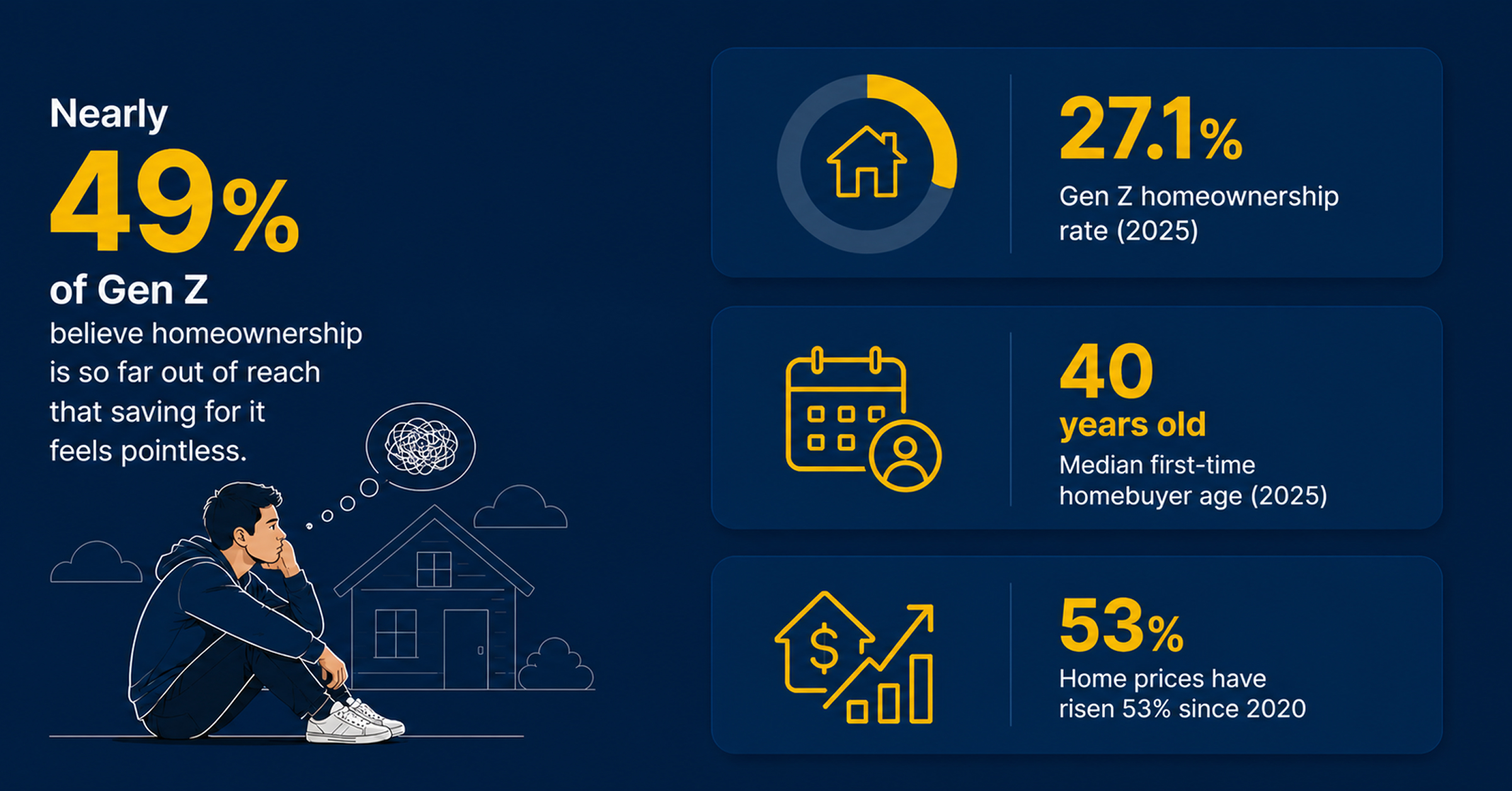
The conclusion for contractors is straightforward: Gen Z, as a pool of homeowners ready to hire you for renovation work, is smaller than previous generations were at the same age, and that gap is meaningful.
Who IS Actually Buying Homes Right Now?
Before drawing the wrong conclusion, it is important to understand what is actually happening in the homebuyer market, because there are growing segments that represent a strong opportunity.
Baby Boomers are now making up 40% of first-time homebuyers in the U.S., a figure that would have seemed unlikely a decade ago. Many are downsizing, relocating, or purchasing second properties, and when they buy, they renovate. This is a high-value customer segment with available equity, established credit, and a strong preference for hiring professionals rather than DIY-ing.
Millennials (ages 29–44 in 2025) are now in their prime homebuying years. Their homeownership rate reached 55.4% in 2025, up from 54.9% the year prior. Nearly half of Millennial homeowners plan to increase their home improvement spending over the next 12 months, compared to 37% of Gen Xers and 27% of Boomers, according to the Home Improvement Research Institute (HIRI). Millennials are not just buying, they are renovating aggressively, and they are increasingly likely to hire contractors for larger-scale projects.
According to the Houzz 2026 House & Home Study, more than half of U.S. homeowners pursued renovation plans in 2025, with Millennials driving a notable generational increase in renovation activity.
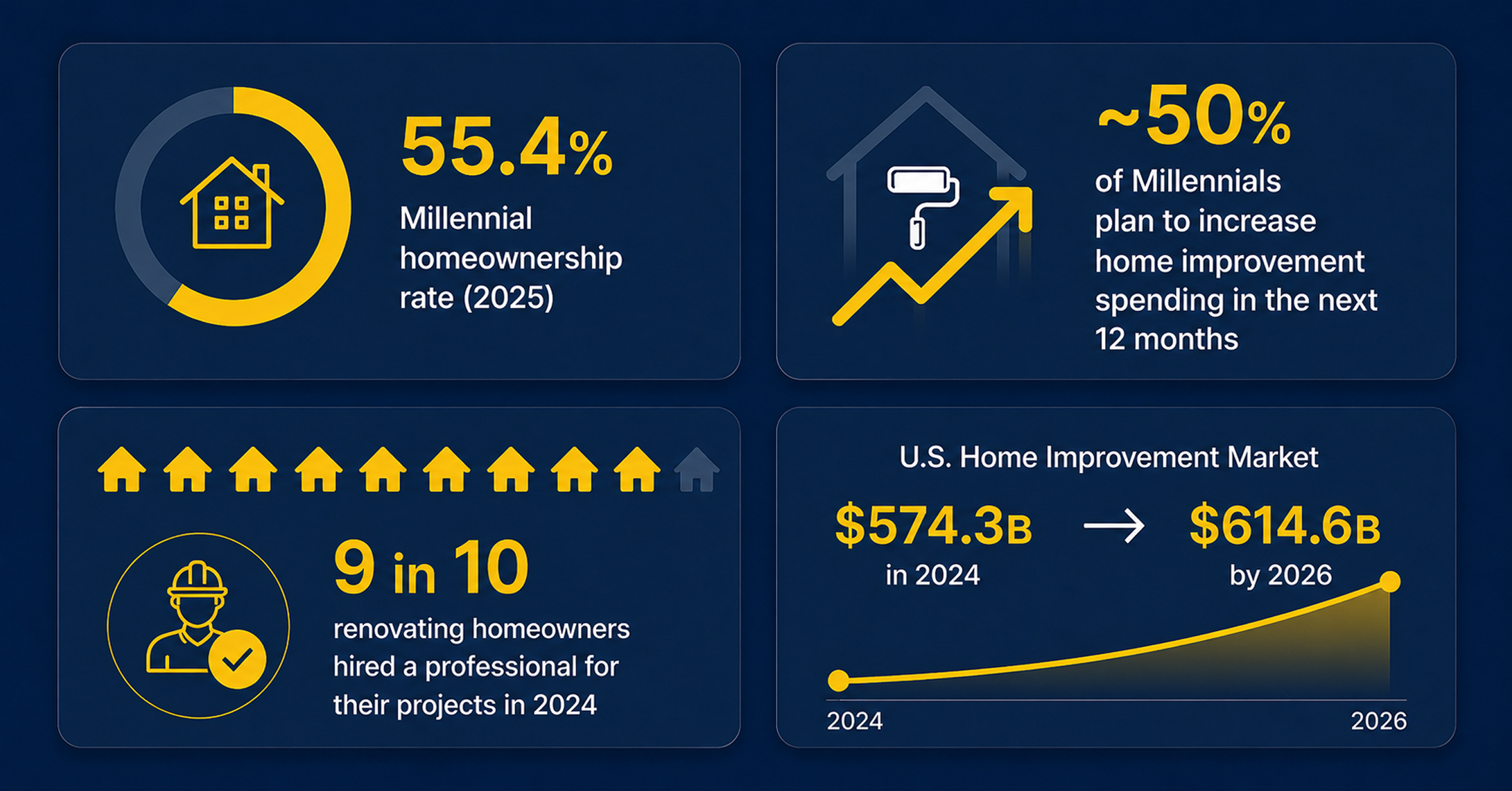
The market is not shrinking. It is shifting. And the contractors who are mapping their customer acquisition strategies around the demographics that are actually buying - Boomers, Millennials, and older Gen Z homeowners will continue to win work.
The Gen Z Renter: A Customer Today, A Homeowner Tomorrow
Here is where the strategic nuance lies for contractors who are thinking beyond the next quarter.
Gen Z renters are not disengaged from home improvement spending entirely. Many are living in rentals where landlords approve cosmetic upgrades. Many are making improvements to leased spaces with landlord permission. And a significant subset, those who have moved into homes owned by parents or family members, are participating in renovation decisions without being the legal owner.
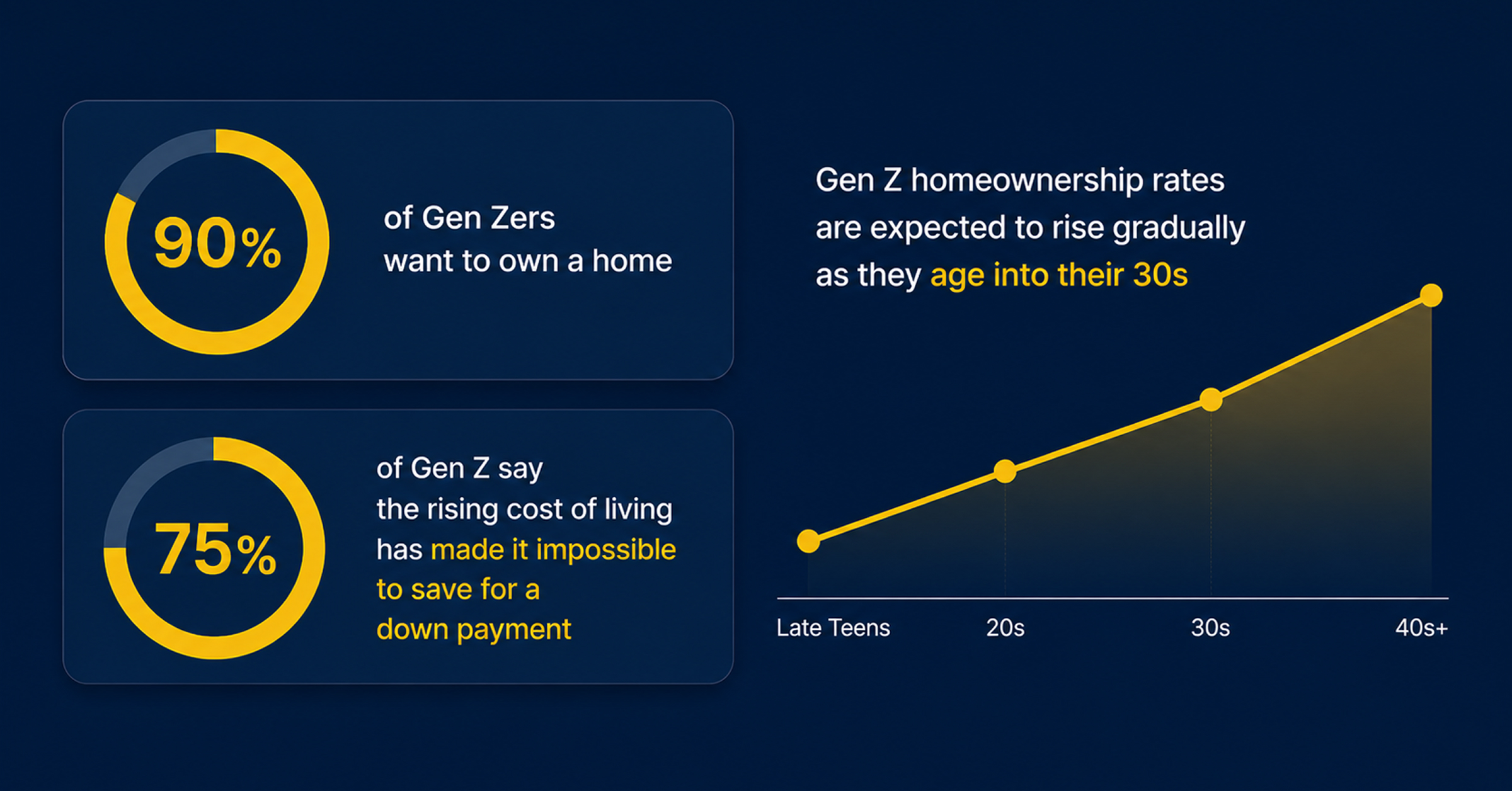
More importantly, the Gen Z renter of today is the Gen Z homeowner of tomorrow. This generation has not abandoned homeownership as a goal. In fact, 90% of Gen Zers still report wanting to own a home someday, according to Clever Real Estate. They are delayed, not disinterested.
When they do buy and, they will, they will come in with different financial profiles, different expectations, and different decision-making patterns than any customer segment you have served before. They will research you online before calling. They will expect transparency on pricing upfront. They will want financing options built into the conversation from the beginning, not offered as an afterthought.
The contractor who starts understanding this customer now, before they are even a homeowner, is the one who earns their business when the time comes.
The Financing Gap That Contractors Are Sitting On
When Gen Z does enter homeownership, they are entering it financially stretched. Many carry student debt, have limited home equity (since they have not owned before), and have been conditioned by the subscription economy to think in monthly payments rather than lump sums.
This creates a specific challenge and a specific opportunity for contractors at the point of sale.
For Millennial and Gen Z homeowners, upfront project costs are frequently the single biggest barrier between a “yes” and a “let me think about it.” The difference between winning a $15,000 kitchen renovation and losing it often has nothing to do with your quality of work or your pricing. It comes down to whether the customer can mentally and financially absorb the cost in the moment.
This is where point-of-sale lending has become a meaningful business lever for home improvement contractors. Rather than presenting a total project price and waiting, contractors who embed financing options directly into the sales conversation, presenting a monthly payment alongside the project cost, remove the friction that causes younger buyers to delay or decline.
According to ServiceTitan’s 2025 Consumer Trends in the Trades Report, younger homeowners demonstrate a notably stronger tendency to invest in home improvement than their predecessors, but they expect flexibility and transparency on payment options. The contractor who can answer “how much per month?” on the spot is the one who moves the conversation forward.
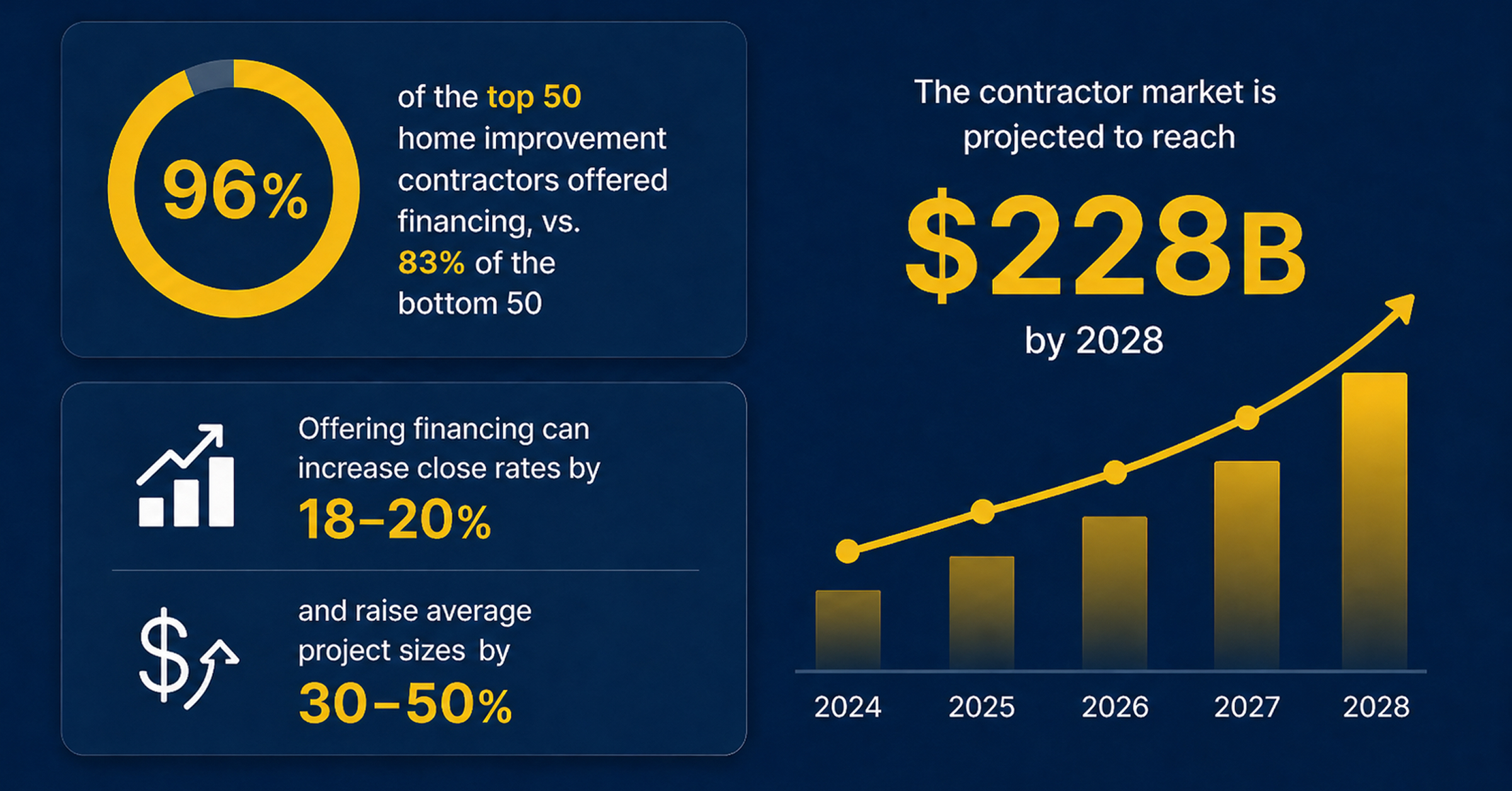
The mechanism matters here. Single-lender financing programs cap your approval rate at whatever the lender’s credit criteria allow. For younger buyers who may have shorter credit histories or higher debt-to-income ratios, a single lender rejection effectively ends the conversation. Multi-lender models that route applications through multiple funding sources dramatically improve the share of customers who get approved, which directly improves your close rate.
What Contractors Should Actually Do Differently
Understanding the Gen Z renter economy is useful. Acting on it is what matters. Here are the practical implications for your business:
1. Do not write off Gen Z as a non-customer. They are not buying in the volumes that Boomers and Millennials are, yet. But they are making decisions in households, influencing renovation choices in family-owned properties, and will age into the buyer pool. Make sure your online presence, reviews, and brand are visible where they research (Google, social media, YouTube).
2. Double down on Boomer and Millennial acquisition. These are your current high-volume customer segments. Boomers have equity and prefer professional contractors for quality-driven projects. Millennials are the most renovation-active demographic and are more likely to hire contractors for larger projects as they age. Tailor your messaging and outreach accordingly.
3. Build financing into every proposal. Regardless of which generation you are selling to, presenting a monthly payment option alongside the total project cost is now table stakes. For younger homeowners, especially, the monthly frame is how they budget. The contractors who present this naturally and early in the conversation win more work than those who bring it up only when a customer hesitates.
4. Pay attention to approval rates, not just offer rates. Offering financing and actually getting customers approved are two different things. The quality of your lending infrastructure matters. A solution that routes through multiple lenders, ensuring that a declined application from one lender automatically moves to the next, gives every customer the best possible chance of getting funded, which in turn gives you the best possible chance of closing the job.
5. Prepare for a more diverse customer base. According to ServiceTitan’s 2025 Consumer Trends Report, 48% of Gen Z customers identify as non-white, and communities of color are projected to drive all net new homeownership through 2040. The contractors who are building culturally competent teams and accessible financing processes are the ones who will be positioned to serve the next wave of homeowners.
The Bigger Picture
The Gen Z homeownership story is not finished. It is, in many ways, just beginning. Delayed does not mean absent, and the structural forces keeping Gen Z out of the market - high prices, elevated rates, and student debt - are gradually moderating. Redfin’s analysis projects that as this generation ages into their 30s, their homeownership rates will continue rising.
For contractors, the takeaway is not panic, it is preparation.
The overall home improvement market remains large and growing. The U.S. remodeling market is projected to reach $614.6 billion by 2026, and professional contractor revenue is expected to approach $228 billion by 2028. There is substantial work to be done. The question is who gets it.
The contractors who adapt their customer acquisition to match where demand actually is while building the financial infrastructure to serve younger, credit-diverse buyers when they arrive, will compound their advantage over time. The ones who do not will find the market gradually harder to navigate.
Gen Z’s renter economy is not a crisis for home improvement contractors. It is a strategic signal. Read it correctly, and there is a significant opportunity on the other side.