Gen Z and Millennial Homeowners: What They Want in Renovations



The home improvement landscape is shifting. No longer is it just Boomers deciding how homes get upgraded. Millennials now own more homes than ever, and Gen Z is quickly entering the market as first-time buyers. Understanding what drives these generations’ renovation choices is key for contractors looking to stay ahead.
This blog dives into generational spending patterns, preferences, and expectations, helping contractors tailor their approach and connect meaningfully with today’s homeowners.
Understanding the Generational Shift in Homeownership
Consumer behavior is evolving, and the latest insights reveal distinct trends among different generations:
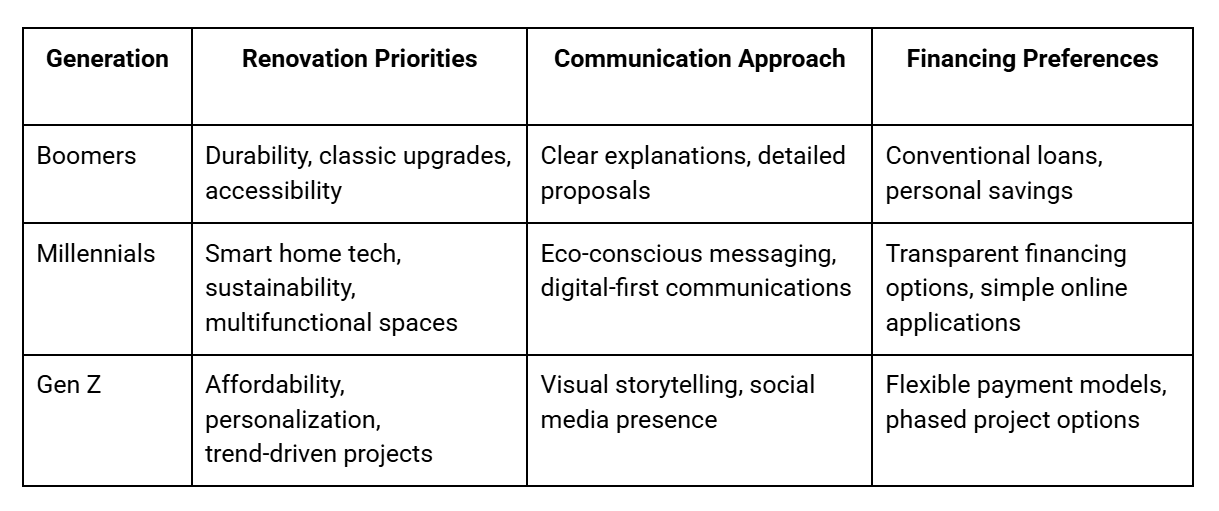
- Boomers: Tend to prioritize durability and long-term value in renovations. They are experienced homeowners, often investing in classic upgrades like kitchens, bathrooms, and accessibility improvements. Their financing comfort typically leans on conventional loans or savings.
- Millennials: Value functionality, technology integration, and eco-friendly materials. They seek renovations that combine style with smart utility, including smart-home features, energy efficiency, and sustainable materials. Millennials are open to financing options, but transparency and simplicity are crucial.
- Gen Z: Emerging homeowners focus on affordability and personalization. They are influenced by social media trends and sustainability. Flexible payment models or incremental project options resonate well with this group, as they may be more budget-conscious than older generations.
By understanding these preferences, contractors can adjust offerings, project scope, and messaging to resonate with each homeowner demographic.
What These Preferences Mean for Contractors
1. Project Planning and Scope
- Boomers: Highlight durability and craftsmanship in project proposals. Emphasize materials that last and designs that blend classic aesthetics with functionality.
- Millennials: Focus on efficiency and value-driven upgrades. Smart-home integrations, sustainable materials, and multifunctional spaces appeal most to this group.
- Gen Z: Offer personalized, modular renovation options. Smaller, phased projects or highly customizable solutions make renovations more accessible and exciting.
2. Communication and Marketing
- Tailor messaging to each generation:
- Boomers appreciate detailed explanations, clear timelines, and reassurance about investment value.
- Millennials respond well to eco-conscious messaging, digital communications, and convenience.
- Gen Z prefers visual storytelling, social proof, and flexible choices presented online or through social media platforms.
- Highlight benefits relevant to their priorities: For example, promoting energy efficiency to Millennials or affordability and flexibility to Gen Z.
3. Financing Considerations
Homeowners’ willingness to invest in renovations is closely tied to financing options:
- Millennials and Gen Z are more receptive to flexible payment solutions.
- Contractors who can present transparent, simple, and flexible financing options are better positioned to secure projects.
- Modern solutions, like a multi-lender waterfall model, allow contractors to offer multiple financing options to each homeowner without complexity. Customers can select the loan that suits them best, while contractors get paid efficiently.
Practical Tips for Contractors by Generation
Here’s a quick-reference guide for connecting with homeowners of different generations:
Real-World Examples of Generational Projects
- Boomer Project: Full kitchen remodel using long-lasting materials, emphasizing safety and usability.
- Millennial Project: Energy-efficient home office with smart lighting and eco-friendly flooring.
- Gen Z Project: Modular bedroom upgrade with customizable furniture and aesthetic personalization options.
Sharing real examples helps contractors visualize how to position services effectively.
Leveraging Technology to Cater to Generational Needs
Modern tools can help contractors meet these generational demands efficiently:
- Digital Design Tools: Allow homeowners to see 3D renderings and choose finishes.
- Online Consultations: Especially appreciated by Millennials and Gen Z for convenience.
- Flexible Financing Platforms: Using models like multi-lender waterfalls, contractors can offer multiple financing options without adding administrative burden. Homeowners can choose what fits their budget, while contractors receive prompt payments.
This approach positions contractors as customer-first and technologically adept, increasing trust and conversion rates.
Marketing and Outreach Strategies
1. Build Generation-Specific Content
- Whether you're writing blogs, publishing social media posts, or using AI to create a video, tailor your content for different audiences:
- Sustainability tips for Millennials.
- Affordability hacks for Gen Z.
- Quality and durability features for Boomers.
2. Leverage Social Proof
- Share testimonials and case studies from similar generational clients.
- Visual content (photos and videos) works especially well for Millennials and Gen Z.
3. Highlight Flexibility and Value
- Position renovations as investments that improve lifestyle and home value.
- Emphasize flexible scheduling and payment options to appeal to budget-conscious homeowners.
4. Embrace Local SEO
- Ensure your business appears in searches for “home improvement near me” and “financing options for renovations.”
- Highlight services relevant to each generation’s priorities to capture qualified leads.
Key Takeaways
- Know Your Generational Audience: Boomers, Millennials, and Gen Z each have unique preferences that influence renovations.
- Tailor Project Offerings: Match project types, materials, and features to the homeowner’s priorities.
- Communicate Effectively: Adjust tone, channels, and storytelling based on generational expectations.
- Offer Flexible Financing: Educate homeowners on multiple financing pathways to make projects feasible.
- Leverage Technology: 3D tools, online consultations, and digital financing solutions enhance the experience and increase conversions.
Conclusion
The home improvement market is evolving as younger generations take ownership. Contractors who understand what motivates homeowners from different generations and who adapt their projects, messaging, and financing options accordingly will be best positioned to succeed.
By observing trends, offering flexible payment solutions, and staying customer-focused, contractors can deliver value, increase trust, and build long-term relationships, all without hard-selling or over-promoting any service.